What if your weekly hive inspection felt less like a tactical retreat and more like a rewarding afternoon in the garden? Many beekeepers accept aggressive "follower" bees and disappointing honey yields as an unavoidable part of the craft. You've likely dealt with the frustration of local mongrel colonies that swarm at the first sign of a nectar flow or exhibit defensive behaviour that makes inspections a chore. Introducing the buckfast bee to your apiary can fundamentally change that experience by bringing stability and elite productivity to your hives.
We'll show you how to transform your results by mastering the specific management secrets of this remarkable hybrid. This guide explores the unique heritage and traits of the buckfast bee, explaining exactly why it remains the gold standard for the unpredictable British climate. You'll learn how to harness their natural vigour to maximise your honey crop whilst maintaining a calm, manageable colony. We'll provide the expert insights needed to move beyond the limitations of local bees and build a professional, high-yielding apiary that is a genuine pleasure to maintain.
Key Takeaways
- Understand the heritage of the buckfast bee as a resilient breed developed specifically to thrive in the British climate following the Isle of Wight disease epidemic.
- Learn why F1 genetics are the only way to guarantee the calm temperament and exceptional productivity required for successful garden beekeeping.
- Master advanced space management techniques, such as using double brood boxes, to accommodate the prolific laying patterns of a healthy Buckfast queen.
- Discover the essential feeding requirements needed to support large colony populations during lean periods and throughout the winter months.
- Identify the advantages of sourcing nucleus colonies over packages to ensure your apiary benefits from established brood and immediate momentum.
What is a Buckfast Bee? Definition and Heritage
The buckfast bee is not a natural subspecies found in the wild. It's a carefully managed breed developed through a century of intensive selection and genetic refinement. This process began as a direct response to the 1916 Isle of Wight disease epidemic. This tracheal mite infestation nearly wiped out the native British honey bee population, leaving beekeepers with aggressive or unproductive colonies. To save the industry, a new approach to genetics was required. This led to the creation of a "Buckfast strain" that remains an evolving pedigree, maintained today by specialist breeders across Europe.
The Legacy of Brother Adam
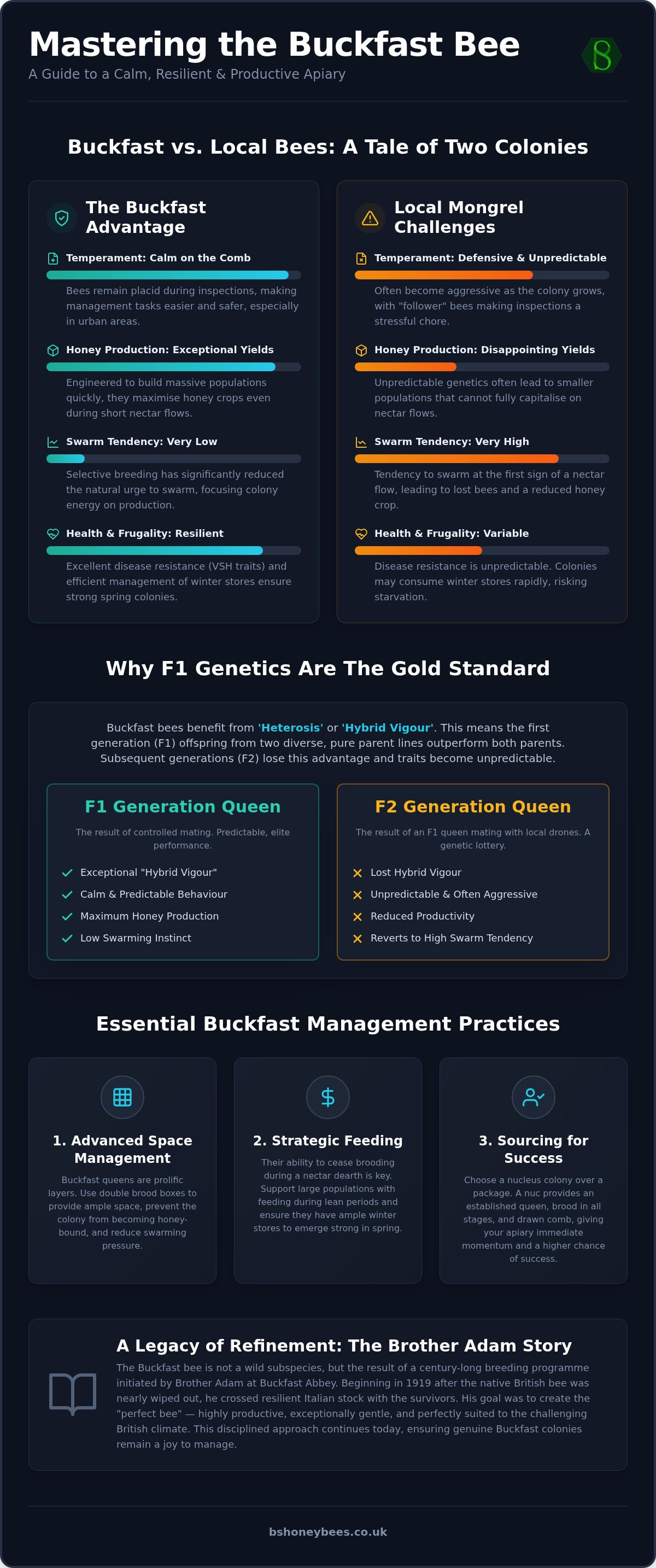
Karl Kehrle, known as Brother Adam, revolutionised apiculture from his base at Buckfast Abbey. Starting in 1919, he travelled extensively across Europe, the Middle East, and Africa to find bees with desirable traits. His mission was clear: he wanted to create the "perfect bee" that combined high productivity with an exceptionally gentle temperament. To protect his work from unwanted cross-breeding, he established an isolated mating station at Sherberton on Dartmoor. This isolation was critical. It allowed for controlled mating away from the influence of local drones. The Buckfast bee was originally created by crossing the Italian Ligurian with the surviving English Black bee. This foundation allowed him to fix specific qualities that are still evident in modern F1 Buckfast Queens today.
The Breed vs. The Subspecies
Unlike Apis mellifera mellifera (the European Dark Bee), the Buckfast is a composite breed. It benefits significantly from heterosis, often called "Hybrid Vigour". This genetic phenomenon occurs when crossing diverse lines, resulting in offspring that often outperform both parent stocks in vitality and honey production. Understanding the Buckfast bee heritage helps beekeepers appreciate why these bees are so prolific. Today, the standards of the breed are upheld by specialists amongst the G.D.E.B. (Federation of European Buckfast Beekeepers). These breeders ensure the pedigree remains stable whilst continuing to select for low swarming and high disease resistance. It's a living heritage that continues to adapt to modern beekeeping challenges. This disciplined approach ensures that a genuine Buckfast colony remains a joy to manage.
Key Characteristics: Why Beekeepers Choose Buckfasts
Choosing the right strain of honey bee is the most significant decision a beekeeper makes. The buckfast bee has earned its reputation as a premier choice because it solves the primary frustrations of modern apiculture: aggression, low yields, and excessive swarming. Whilst local mongrel bees often become defensive as the colony grows, a genuine Buckfast remains manageable regardless of its size. This stability makes them the standard for those prioritising both productivity and a stress-free apiary environment.
High honey production is a hallmark of the breed. These bees are engineered to build massive populations quickly, allowing them to take full advantage of even the shortest nectar flows in the British summer. Selective breeding has also significantly reduced their natural urge to swarm. This means you spend less time chasing bees into trees and more time managing a focused, productive workforce. Modern breeding programmes also prioritise Varroa Sensitive Hygiene (VSH) and resistance to chalkbrood. This ensures your colonies stay healthy with minimal intervention.
Temperament and Handling
The "calm on the comb" behaviour of the Buckfast is a revelation for many. During inspections, the bees stay still and continue their work rather than flying at the beekeeper or "boiling" over the sides of the brood box. This predictable behaviour is essential for urban beekeeping where public safety is paramount. It also makes logistical tasks far easier. Spotting the queen becomes a simple process when she isn't hidden beneath a panicked mass of bees. If you're currently struggling with a defensive colony, introducing an F1 Buckfast Queen can completely transform the temperament of your hive within weeks.
Frugality and Overwintering
Buckfasts are surprisingly frugal despite their large colony size. They possess a unique ability to cease brooding during nectar dearths. This prevents them from consuming their winter stores prematurely. It's a distinct advantage over pure Italian strains that often require heavy feeding to survive a damp UK winter. They manage their resources with high efficiency, ensuring they have the stamina to emerge strong in the spring. This balance of a large workforce and careful food management makes them exceptionally resilient. They don't just survive the winter; they arrive at the first spring forage ready to work.
Understanding Genetics: F1 vs. F2 Buckfast Queens
Maintaining the integrity of your apiary requires a clear understanding of generations. An F1 queen is the first generation produced from a pedigree breeder mother. This mother is a selected individual from a stable, high-quality lineage. When you choose an F1, you're investing in a predictable outcome. You get the gentleness and productivity that the buckfast bee is famous for. It's the most reliable way to ensure your colonies perform to a professional standard.
Problems often arise when beekeepers allow their colonies to raise their own queens from F1 stock. These daughters are known as F2 queens. Whilst the F1 mother has guaranteed genetics, her F2 daughter undergoes a genetic lottery when she flies out to mate. She'll likely mate with local drones of unknown origin. This recombination of genes often leads to a rapid loss of the desired traits. You might see a sudden spike in defensive behaviour or a significant drop in honey production in subsequent generations.
Aggression is the most common side effect of "running out" the genetics into F2 or F3 generations. Professional beekeepers don't leave their productivity to chance. They choose to buy buckfast queen bees every year to ensure their apiary standards remain elite. This systematic replacement of queens prevents the degradation of temperament. It keeps the workforce focused on foraging rather than defending the hive entrance. It's a logistical necessity for anyone running a serious honey production operation.
The Importance of Open Mating
Mating quality is just as critical as the queen’s own pedigree. An F1 queen is only as good as the drones she mates with. Reputable breeders use open mating in areas saturated with high-quality Buckfast drones. They maintain specific "drone mother" colonies to ensure the local drone population is dominated by superior genetics. This process standardises the temperament of the offspring. High mating quality ensures that the vigour of the buckfast bee is fully realised in your hives, providing the momentum needed for a heavy honey crop.
When to Requeen Your Hive
Don't wait for your bees to become unmanageable. Signs that your colony’s genetics are degrading include increased "runniness" on the comb and bees following you after an inspection. Introducing a fresh F1 queen is the most effective way to reset a failing or aggressive colony. You can find detailed advice on selecting the right stock in our guide to mated queen bees UK. A timely intervention ensures your apiary remains a productive and enjoyable environment for the long term.
Managing a Buckfast Colony: Best Practices for Success
Managing a buckfast bee colony requires a proactive approach to accommodate their rapid growth and high productivity. These bees are engineered for momentum. A healthy colony will expand much faster than local mongrel strains, meaning your management cycle must stay ahead of the bees' needs. Success depends on your ability to provide adequate space and nutrition whilst maintaining a rigorous inspection schedule. Failing to anticipate the needs of such a prolific workforce often leads to avoidable stress for both the beekeeper and the bees.
Space management is your most critical task. A high-quality Buckfast queen is a prolific layer, often filling frames with wall-to-wall brood in a matter of days. This expansion requires a hive system that can scale. The British National beehive is the standard choice for UK beekeepers, but a single brood box is rarely sufficient for this breed. You must also be diligent with feeding. Because Buckfasts maintain larger populations, they consume more stores during nectar dearths. Ensure they have constant access to food to prevent the colony from stalling during unpredictable British weather.
Regular swarm control remains vital. Whilst the breed has a naturally low swarming tendency, it's not non-existent. A crowded hive will eventually trigger the swarming instinct regardless of genetics. Stick to a seven-day inspection cycle during the height of the season to check for queen cells and ensure the queen has enough empty cells to continue laying.
Choosing the Right Hive Setup
To maximise the potential of your queens, consider using a "Brood and a Half" or "Double Brood" configuration. This involves adding a second brood box or a super to the main brood nest. It provides the queen with the expansive area she needs to build a massive workforce. Using high-quality national hive frames allows for seamless expansion and easier inspections. For those rearing spare queens or overwintering smaller units, poly nucs offer superior insulation and are an essential tool in a professional apiary setup.
Seasonal Management Tips
Buckfast colonies typically start their spring build-up earlier than other breeds. Monitor them closely in late February and March to ensure they don't starve before the first major forage. In autumn, heavy feeding is mandatory. You are feeding a large winter cluster, so ensure the hive is heavy before the cold sets in. You should also be vigilant with Varroa monitoring. High-population colonies can see mite levels spike rapidly. Regular testing and timely treatments are essential to keep your bees healthy and productive. If you need to upgrade your equipment for the coming season, you can find everything you need in our collection of British National Hives and Frames.
Sourcing Quality Buckfast Bees in the UK
Sourcing a high-quality buckfast bee is the foundation of your apiary’s success. You shouldn't settle for "Buckfast-type" bees from unverified sources. A reputable breeder provides clear pedigree information and prioritises temperament above all else. At BS Honey Bees Ltd, we specialise in F1 Buckfast queens that are open-mated for maximum vigour. This ensures you receive the elite productivity and calm behaviour the breed is famous for. Choosing a specialist means you're investing in a dependable partner committed to your success as a beekeeper.
Starting with a nucleus colony is almost always superior to buying a package of bees. Packages are often stressed by travel and lack the established brood needed for immediate momentum. When you look for honey bee nucs for sale UK, you're choosing a colony that already has a laying queen and frames of brood at all stages. This setup allows the colony to expand rapidly once transferred to a full-sized hive. It's the most efficient way to ensure your apiary is productive from day one.
Nucleus Colonies vs. Mated Queens
Deciding between a nuc and a mated queen depends on your current apiary status. If you're starting a new apiary, a 5 or 6 frame nuc provides the perfect foundation. An overwintered nuc is particularly valuable. These colonies are ready to explode in population during the spring, often securing a significant honey crop in their first year. If you have an existing colony with poor genetics or an old queen, introducing a new F1 Buckfast queen is the best path. Successful introduction requires a queen-less colony and a slow release from a cage to ensure acceptance.
Preparing for Your Delivery
Logistics are critical when ordering live bees online. Ensure you have a high-quality bee suit UK ready and tested before your bees arrive. BS Honey Bees Ltd uses Royal Mail Special Delivery to provide nationwide next-day delivery, ensuring the bees spend the minimum amount of time in transit. Once they arrive, place the nuc in its final position and open the entrance immediately. Give them 24 hours to settle before transferring them to a full-sized hive. This methodical approach ensures your new buckfast bee colony starts its life in your apiary without unnecessary stress.
Upgrade Your Apiary for the 2026 Season
Transforming your beekeeping experience starts with a commitment to superior genetics and proactive management. By understanding the unique heritage of the buckfast bee, you can move away from the frustrations of aggressive colonies and unpredictable yields. Success in the apiary isn't down to luck. It's the result of choosing stable F1 stock and providing the expansive brood space these prolific layers require. Whether you're establishing a new site or revitalising an existing hive, maintaining elite standards is essential for a rewarding harvest.
As the UK’s #1 Queen Retailer and a specialist F1 Buckfast breeder, we provide the reliable stock you need to thrive. We offer nationwide 7-day delivery options to ensure your queens arrive in peak condition, ready to lead your colonies. Don't leave your productivity to chance next year. Order your F1 Buckfast Queens for the 2026 season today and take the first step toward a calmer, more profitable apiary. We're ready to help you achieve your best season yet.
Frequently Asked Questions
Are Buckfast bees aggressive or gentle?
Buckfast bees are renowned for their exceptionally gentle temperament. Unlike some local mongrel strains that become defensive during inspections, these bees remain calm on the comb. This trait is a result of decades of selective breeding by Brother Adam and modern pedigree maintainers. It is this reliable gentleness that makes them the preferred choice for urban gardens and beginners who want to work without the stress of aggressive follower bees.
How much honey can a Buckfast colony produce in the UK?
A healthy Buckfast colony is capable of producing significantly higher yields than standard local bees, often exceeding 40kg to 60kg in a good season. Their ability to build massive populations quickly allows them to exploit major nectar flows like oilseed rape or lime. Whilst weather plays a role, their prolific nature ensures they maximise every available foraging window. Proper space management using double brood boxes is essential to support these high production levels.
What is the difference between Buckfast and Carniolan bees?
Buckfast bees are a composite breed focused on high productivity and low swarming, whilst Carniolan Queens produce colonies known for rapid spring build-up and excellent overwintering. Carniolans are a natural subspecies that can be slightly more prone to swarming if space isn't managed perfectly. Buckfasts generally maintain larger colonies throughout the summer. Both are gentle, but the Buckfast is often favoured for commercial honey production due to its sustained workforce and frugality.
Do Buckfast bees swarm more than other breeds?
No, Buckfast bees were specifically bred for a low swarming instinct. Brother Adam prioritised this trait to reduce the workload for beekeepers managing multiple apiaries. However, because they are so prolific, they can quickly outgrow a single brood box. If they become congested, the swarming urge will eventually trigger. Providing ample space with British National hives and regular seven-day inspections ensures this natural behaviour remains under your control and doesn't disrupt your honey crop.
Are Buckfast bees suitable for beginners in beekeeping?
Yes, they are arguably the best choice for those new to the craft. Their calm behaviour allows beginners to perform inspections slowly and methodically without being overwhelmed by defensive bees. This builds confidence and makes it easier to spot the queen or identify brood patterns. Starting with one of our 5 or 6 frame nucleus colonies provides a stable foundation, allowing you to learn the ropes with a manageable, predictable population that is a joy to inspect.
What does an F1 Buckfast queen mean?
An F1 Buckfast queen is the first-generation daughter of a pedigree breeder mother. These queens are open-mated in drone-saturated areas to ensure the offspring inherit the desired traits of gentleness and productivity. This generation represents the peak of hybrid vigour. Buying an F1 ensures you aren't dealing with the genetic lottery of F2 or F3 generations, which often lose their calm temperament and become aggressive when mated with local drones of unknown origin.
How do Buckfast bees handle the British winter?
They handle the British winter exceptionally well due to their frugal nature. Unlike some southern European strains that continue brooding heavily in cold weather, the buckfast bee can cease brooding during dearths to conserve stores. This allows them to survive long, damp winters on fewer resources. They form a tight cluster and manage their food efficiently, ensuring the colony emerges strong and ready for the early spring forage without requiring excessive emergency feeding.
Where can I buy genuine Buckfast bees in the UK?
You should always source your bees from a specialist breeder to ensure you are getting genuine genetics. BS Honey Bees Ltd is a leading specialist in F1 Buckfast Queens and nucleus colonies across the UK. We prioritise health, temperament, and productivity in all our stock. We offer nationwide delivery via Royal Mail Special Delivery to ensure your bees arrive safely. Our focus on quality ensures you receive bees that meet the highest professional standards for your apiary.